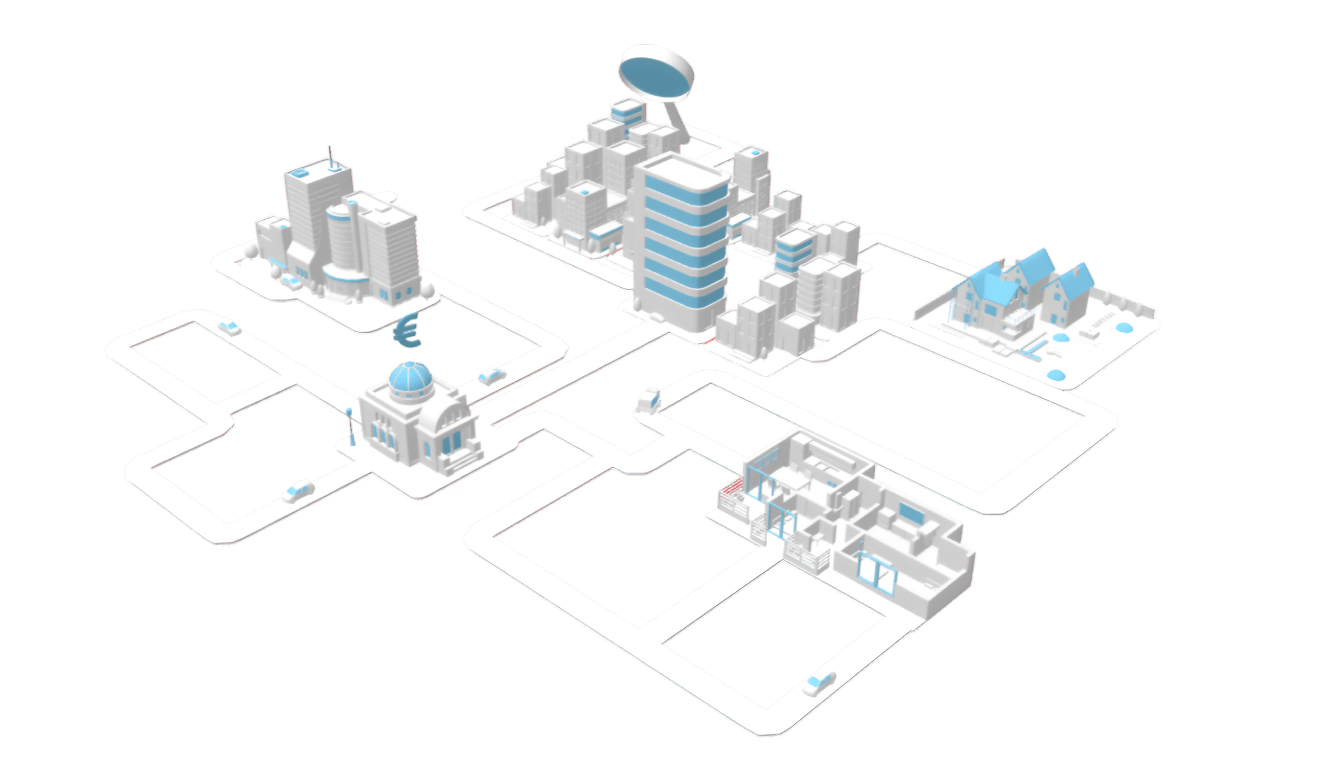
LDP Group provides a seamless, end-to-end real estate service designed for expats in Germany. From identifying high-potential properties to securing optimal financing, we manage every step, including tenant placement, rental management, and coordination with trusted tax specialists. Beyond the first purchase, we work with you on a tailored long-term portfolio strategy, ensuring your investments grow in value, generate steady income, and maximize the unique tax advantages of the German real estate market.
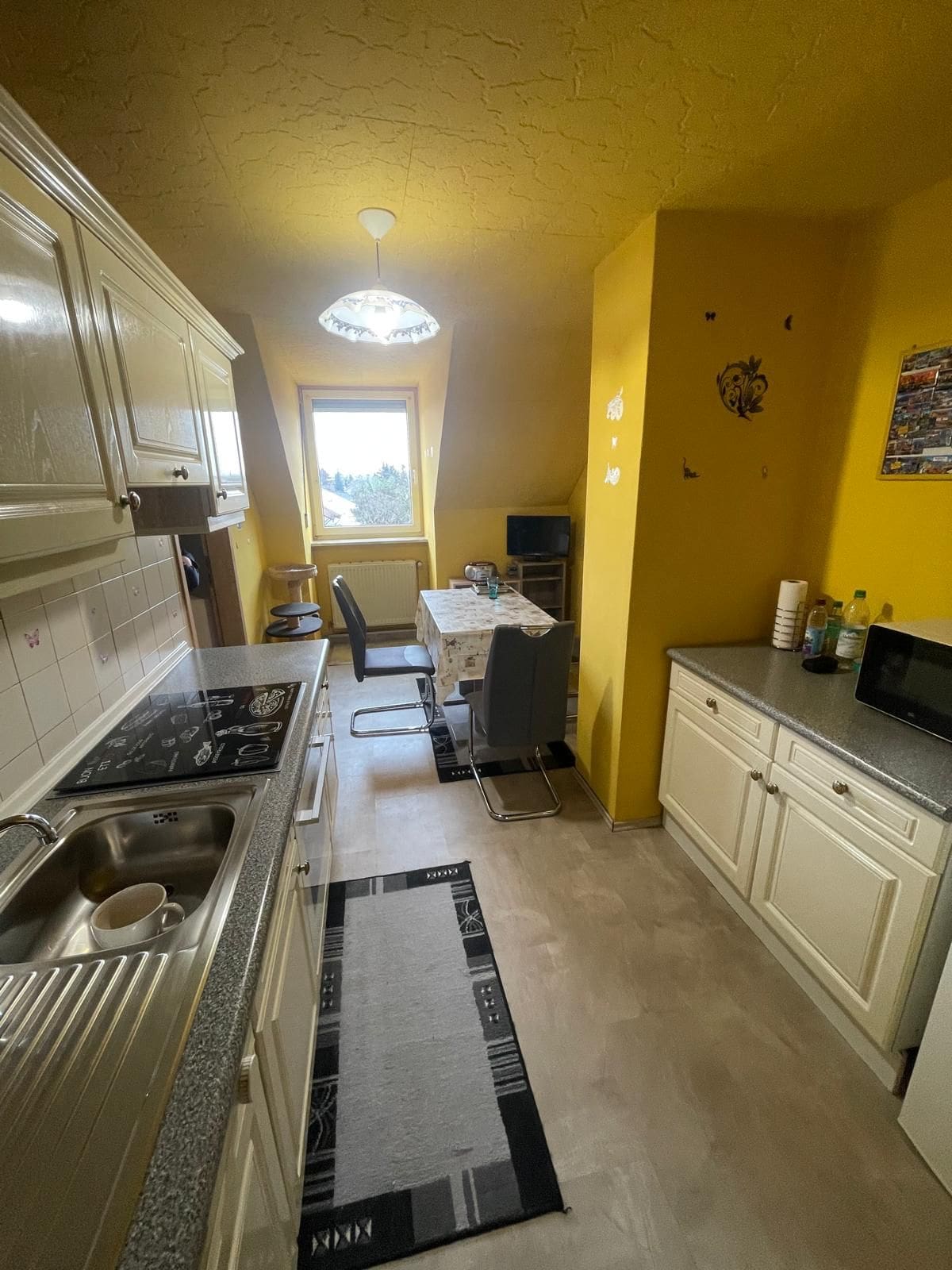
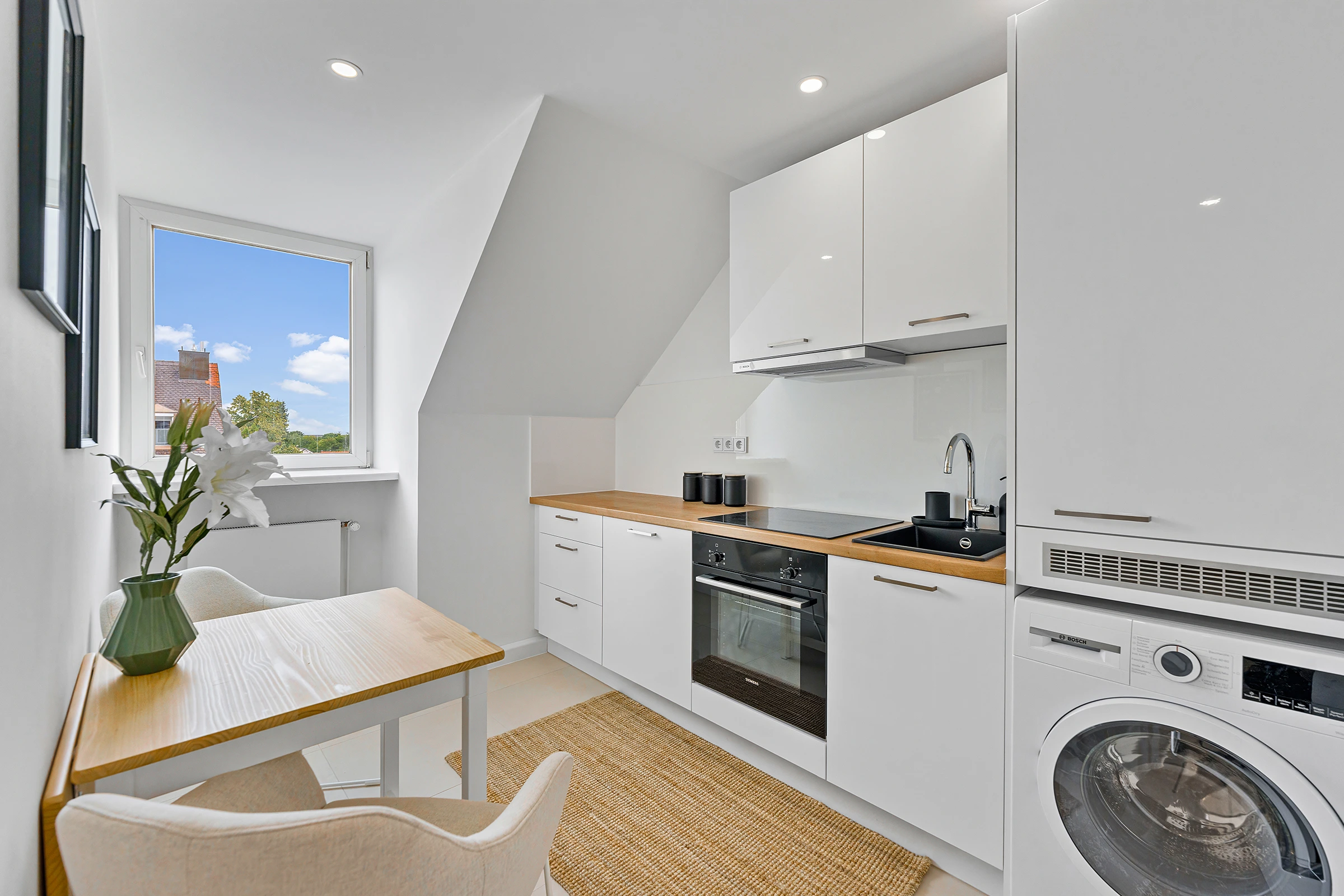
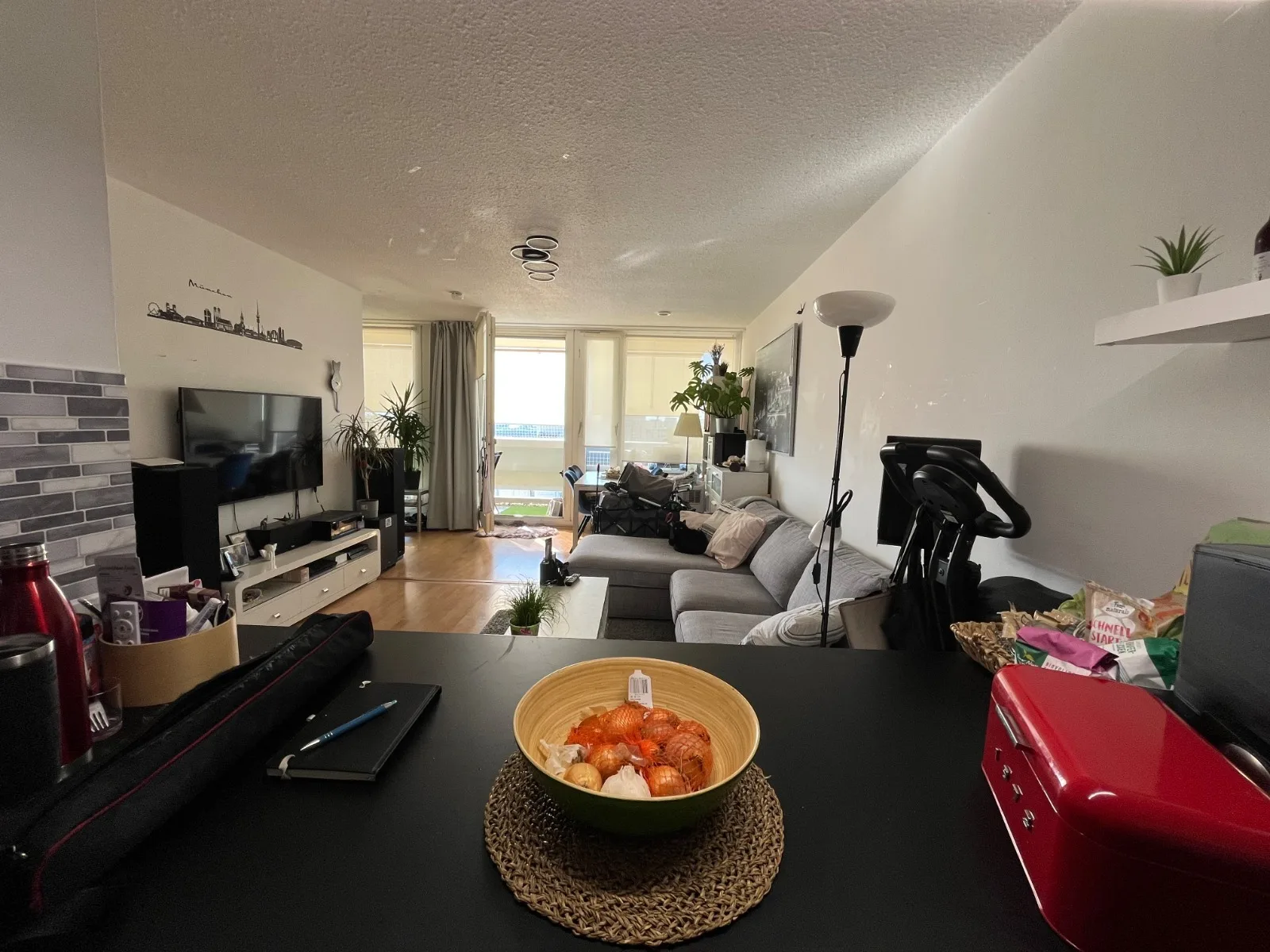
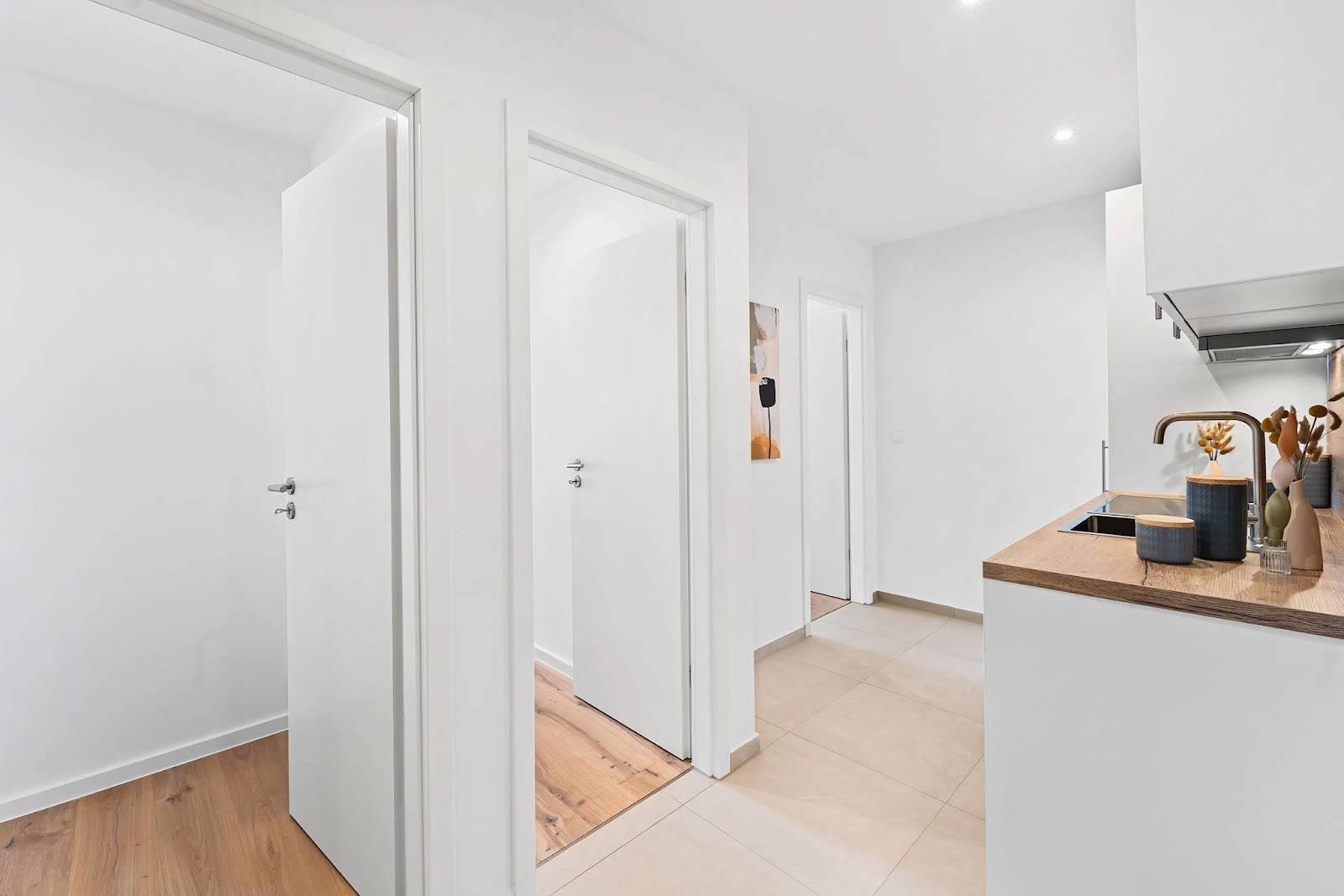
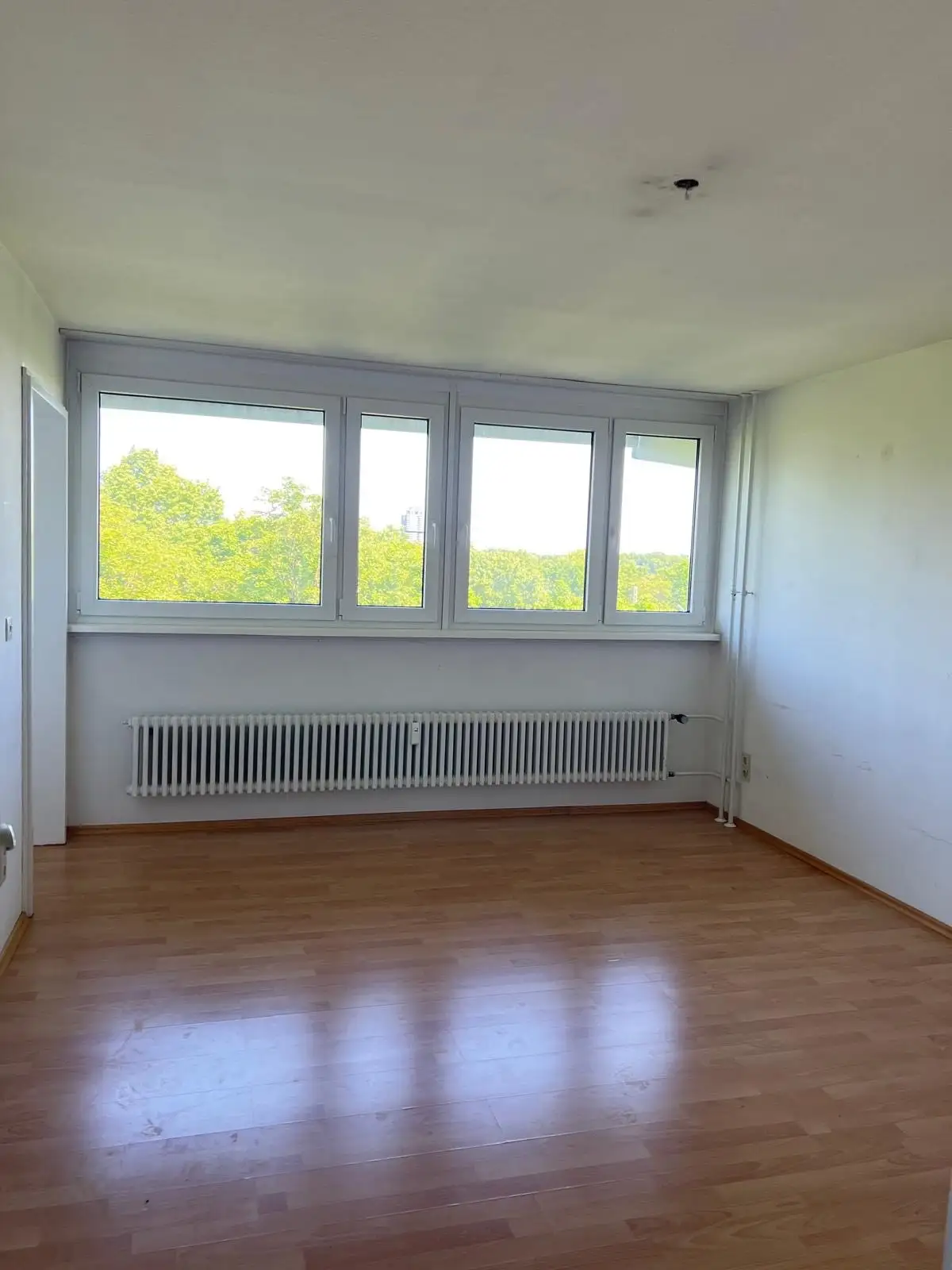
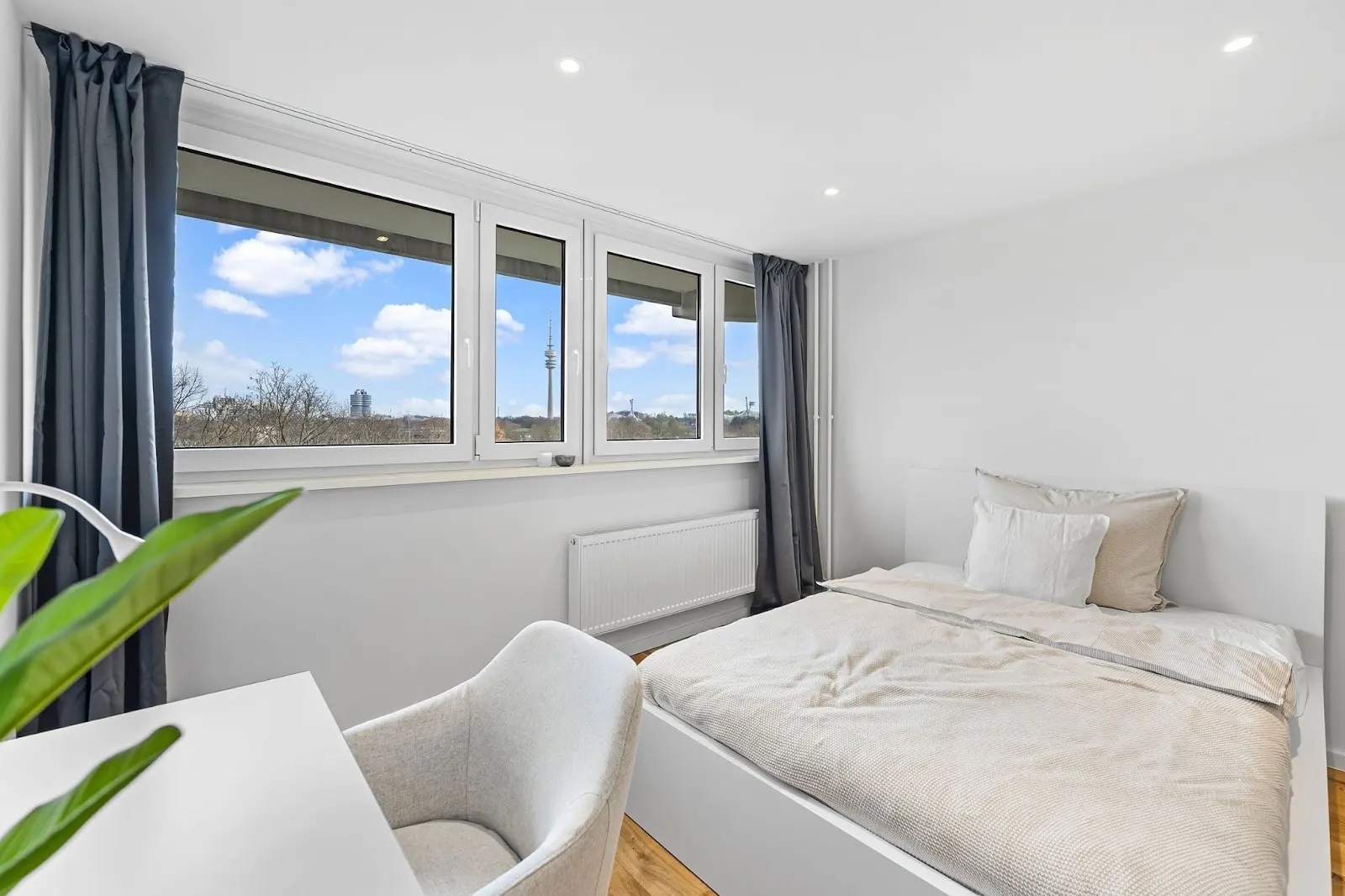
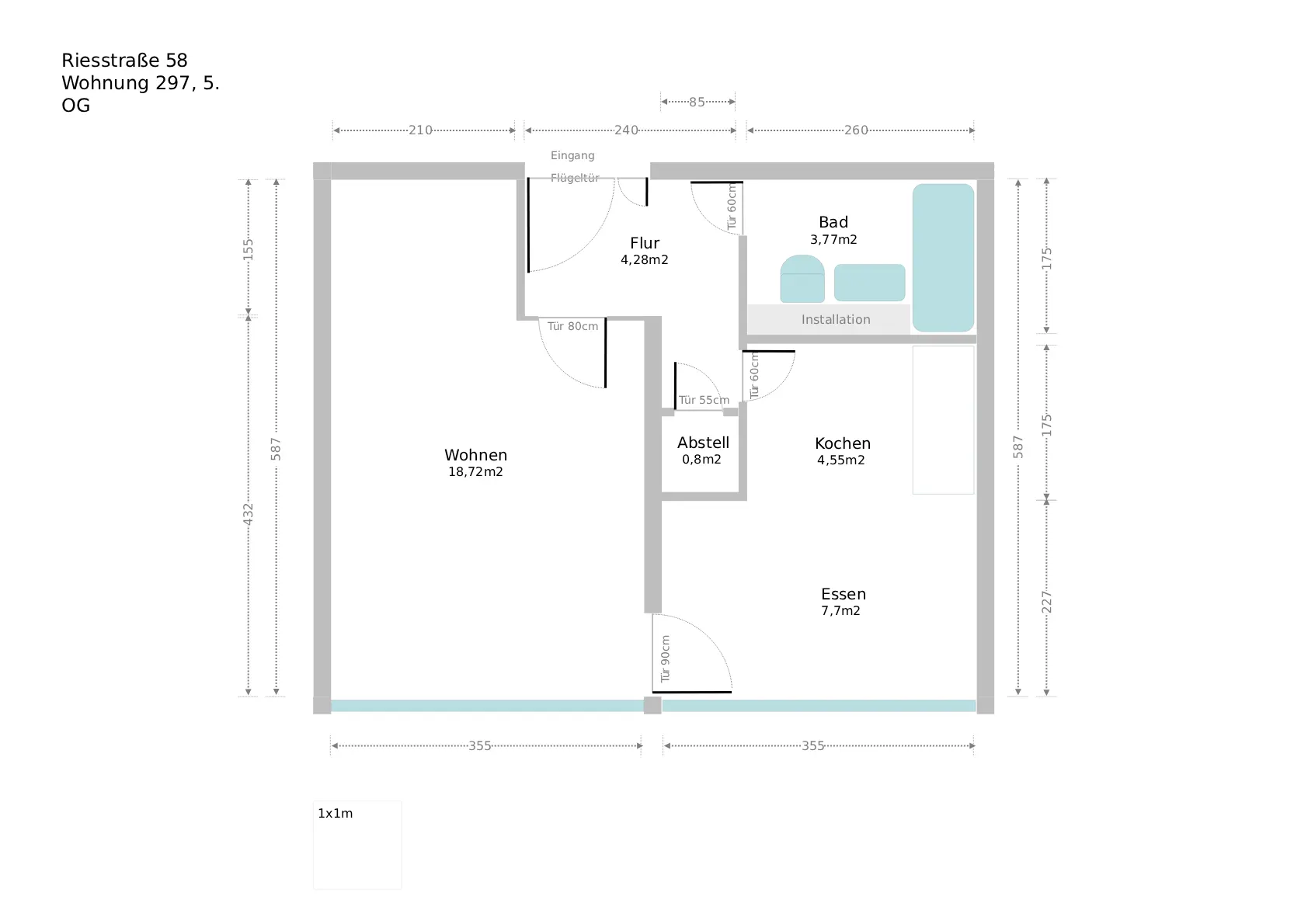
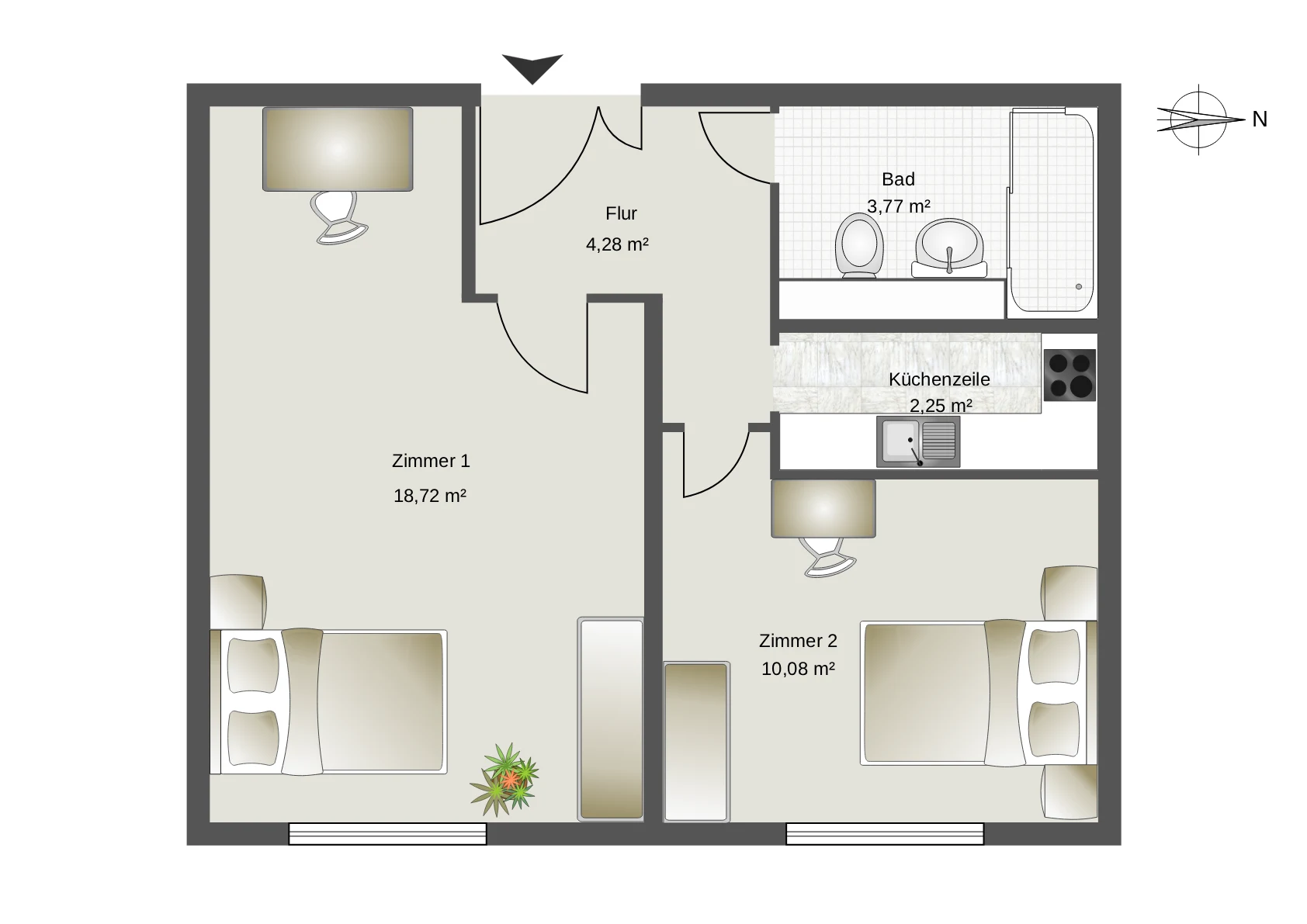
These are individual properties after repositioning, not market averages. The yield marked “after” is what that specific unit produced once it was let on new terms, which is why it sits above the city figure. City-wide gross yields run lower: across the 25 German cities we track they range from 2.6 to 4.9 percent, with Munich at 3.2 and Berlin at 4.1. Those figures, and the source behind each one, are in our city reports. The tax figures shown here depend on the building, the purchase structure and your personal situation. They are not a forecast for any other property.
Germany’s real estate investment market offers strong long-term potential driven by a housing shortage of over 800,000 homes. Rising immigration and limited new construction continue to increase rental demand across major cities. For investors and expats, property investment in Germany provides stable rental yields, capital appreciation and long-term financial security in one of Europe’s strongest economies.
Germany’s tax framework provides highly attractive advantages for real estate investors, particularly for high-income expatriates.
Germany’s financing environment offers investors the ability to control high-value assets with exceptionally low entry capital.
LDP Group provides a seamless, end-to-end real estate investment service for expats in Germany. From identifying high-potential investment properties to securing optimal mortgage financing in Germany, we manage every step of the property investment process, including tenant placement, rental property management and coordination with trusted tax advisors. Beyond your first purchase, we develop a tailored long-term real estate portfolio strategy designed to grow your property value, generate stable rental income and maximize the tax benefits of real estate investment in Germany.
Now is the perfect time to invest in properties that pay for themselves through secure rental income. Few opportunities rival the long-term wealth potential of real estate today. Thanks to our extensive network and diverse expertise, we identify the ideal properties with optimal financing tailored to your needs. Often, we provide our clients with not only new investment opportunities but also fresh perspectives that can transform their financial futures.
LDPGroup operates on an internal commission structure, generating revenue by facilitating transactions between property owners, construction companies, and prospective buyers. This means that LDPGroup is compensated by the housing providers themselves, rather than charging an additional fee to the customer. Our business model is designed to provide a seamless and cost-effective home buying experience, with no hidden charges passed on to the end consumer. LDPGroup’s expertise and industry relationships allow us to connect qualified buyers with premier properties, while earning revenue through the standard provisions built into the developer’s sales process. This structure ensures transparency and aligns our incentives with delivering the best possible outcome for our clients. By working closely with housing providers, we’re able to leverage our market knowledge and negotiating power to secure favorable terms: benefits that are directly passed on to you, the homebuyer.
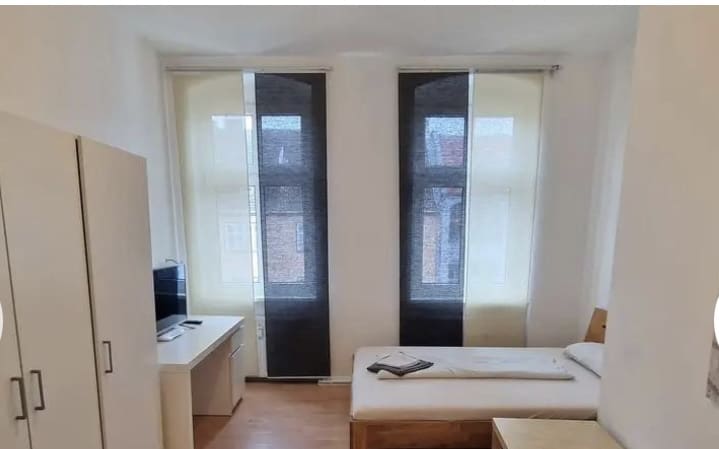
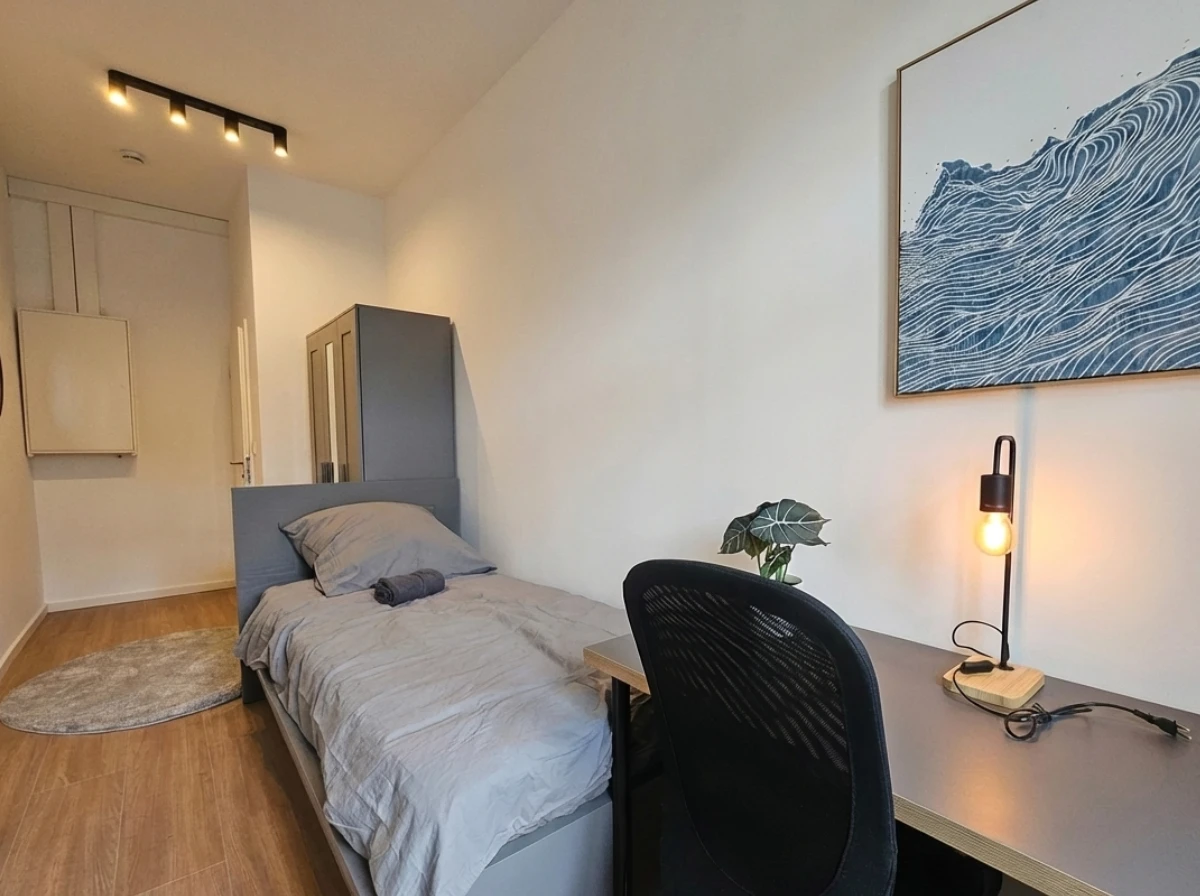
Co-living, called a Wohngemeinschaft or WG in Germany, means letting one apartment to several tenants who each hold a room, instead of to a single leaseholder. For a landlord the appeal is that the rooms are priced separately, so the total rent a unit produces can exceed what one household would pay for the same flat. The cost side is what the pitch usually leaves out: higher turnover, more management, and rules that differ from city to city on how a unit may be split and let. We do not publish a national yield figure for co-living, because there is no source that supports one. Ask us for the arithmetic on a specific building instead.
Our focus is Munich and the surrounding Bavarian market, with further activity in Berlin and in the larger west German cities. Sourcing is mostly off-market, which means a unit is usually not on the public portals at the point we see it. Separately from what we sell, we publish verified market data for 25 German cities: price per square metre, average cold rent, gross rental yield and vacancy, with every figure carrying the source it came from. So you can check a city against the numbers before you ever speak to us.

Three mechanisms do the work, and all three apply to a property you let out, not to a home you live in yourself. Depreciation under § 7 EStG writes off the building, never the land: 3.0 percent a year for buildings completed from 2023, 2.0 percent for 1925 to 2022, 2.5 percent before 1925, plus a 5.0 percent declining-balance option under § 7 Abs. 5a EStG where construction started between 1 October 2023 and 30 September 2029. Deductions: mortgage interest, running costs and maintenance come off the rental income. The ten year rule: under § 23 EStG the gain on a private sale is free of tax once you have held the property for ten years. None of it is automatic. It depends on how the purchase is structured, and the depreciation rate depends on the build year of the specific building.
LDP Group partners with banks and mortgage providers in Germany to help our customers secure financing for property purchases in under 21 days, which is what makes an off-market deal workable at all, because those sellers do not wait. Our partners handle pre-approval, the comparison across lenders, refinancing and insurance, often through free consultation funded by lender commissions. What we put in front of you before any of that starts is the equity number, because it decides whether the purchase happens. If you live in Germany with German income, published requirements start at around 10 percent down plus the purchase costs. If you live abroad, our working figure is 40 to 50 percent of the price in equity, a 50 to 60 percent loan-to-value, with the purchase costs on top of that.
With LDP as your reliable partner, we offer high-yielding exclusive off-market properties in Germany’s most popular location for real estate investors: Munich. We are here to assist non-German speakers to invest successfully. Our experts guide you step by step on how to build a six-figure fortune with a modest monthly contribution. Sit back and let us assist you in achieving stress-free wealth generation. Over the last two years, we’ve amassed a real estate portfolio of over 8 figures, propelled by our distinctive strategy. What’s more, we continue to expand our portfolio with new properties each month. Hundreds of customers have already benefited from our system and are now successful landlords. And we firmly believe: you can achieve this too!
Yes, and there is no permit, no residency requirement and no citizenship test. German law places no restriction on foreign ownership of residential property, and the process is the same one a German buyer goes through: the contract has to be recorded by a notary under § 311b Abs. 1 BGB, and the transfer is only final once the land registry enters you as the owner. You do not have to be in the room for the notary appointment. Representation by power of attorney is routine, but the land registry will only act on one that satisfies § 29 GBO: the original document with a notarially certified signature, and an apostille if it was certified outside Germany.
How long you will hold it decides this, more than which city you pick. Across the 25 cities we track, gross rental yields run from 2.6 percent in Hamburg to 4.9 percent in Wuppertal, a spread of about 2.3 percentage points. Against that, purchase costs of roughly 5.5 to 8.5 percent of the price are spent on day one and never come back. Spread over a five year hold, they cost 1.1 to 1.7 percentage points of yield every single year, which is more than the gap between the best and the worst city in the country. Hold for ten years and the same costs weigh half as much, and § 23 EStG makes the gain on a private sale free of tax. Short horizons are where German property goes wrong, far more often than bad cities.
Where you live decides this, not which passport you hold. Banks assess whether your income is verifiable and durable and how much equity you bring; citizenship appears in none of the published criteria we found. If you live in Germany with German income, published requirements start at around 10 percent down plus the purchase costs. If you live abroad, the lender pool is smaller and the equity requirement jumps: our working figure from arranging this financing is 40 to 50 percent of the price in equity, which is a 50 to 60 percent loan-to-value. That is lender convention, not law, and no statute sets a ceiling. Rates on a ten year fixed ran 3.63 to 4.19 percent on 20 August 2026 depending on the loan-to-value band, and they move daily, so treat any rate you read anywhere, including here, as date-stamped rather than current.
Budget roughly 5.5 to 8.5 percent of the purchase price on top of the price, depending on the federal state and on whether an agent is involved. Property transfer tax is the largest piece and is set per state and runs from 3.5 to 6.5 percent: 3.5 percent in Bavaria; 5.0 percent in Baden-Württemberg, Lower Saxony, Rhineland-Palatinate, Saxony-Anhalt and Thuringia; 5.5 percent in Bremen, Hamburg and Saxony; 6.0 percent in Berlin, Hesse and Mecklenburg-Vorpommern; 6.5 percent in Brandenburg, North Rhine-Westphalia, Saarland and Schleswig-Holstein. Notary and land registry add about 2 percent, are statutory under the GNotKG, and are therefore identical everywhere and not negotiable. Agent commission, where an agent is involved, costs the buyer 2.98 to 3.57 percent by state convention, capped at half the total commission on consumer purchases under §§ 656a to 656d BGB. The part people miss: a lender will normally not finance any of this. It comes out of your own money on top of the deposit.
Across the 25 German cities we track, gross rental yields run from 2.6 percent in Hamburg to 4.9 percent in Wuppertal, with a median of 4.0 percent. Munich sits at 3.2 and Berlin at 4.1, so the pattern is not simply big city against small one. Individual units can beat their city's average, particularly after a repositioning, which is why the cases further up this page sit higher. The city figure is the honest starting point. Those are gross figures: annual cold rent against purchase price, before any cost at all. Net yield is what you actually keep, and management, maintenance, the non-recoverable part of the service charges, vacancy and income tax take a real share of the gross out. Every one of the 25 figures on our site carries the source it was read from and the date it was read.

An off-market property is one that is never publicly listed, so it does not show up on the portals or in a portal search. The upside is less competition, and sometimes a price that has not been bid up by a viewing queue. The part worth being straight about: no listing also means no comparison set, so you cannot benchmark the asking price the way you can against twenty similar flats on a portal. That makes two checks matter more than they otherwise would, an independent valuation and the price per square metre for that specific district rather than for the city as a whole. We publish the second one for every city we cover.
No. Non-residents can own and let German property, and remote ownership is normal. Two consequences are worth knowing before you start. Financing gets harder: expect a smaller lender pool and 40 to 50 percent equity, rather than the roughly 10 percent a resident with German income may be offered. The rent is taxed in Germany from the first euro. Under § 49 EStG your rental income is German-source income, and § 50 Abs. 1 EStG has the effect that the basic allowance, 12,348 euro in 2026, is added back onto your taxable income instead of exempting the first slice of it. The notary appointment itself can be handled by power of attorney, so remote ownership does not mean flying in to sign.
No. What moves your terms is your employment contract and your residence status, not your passport, and citizenship appears in none of the published lender criteria we found. Where the permit does bite is equity: published requirements run from around 10 percent down for permanent residents and EU citizens to 20 or 30 percent for temporary permits. An EU Blue Card counts as a temporary permit, but it also shortens the road to permanent settlement, which is what moves you into the better band. Under § 18c Abs. 2 AufenthG that is 27 months with basic German and 21 months with sufficient German, so the language certificate is worth six months of materially better financing terms.

As read on 20 August 2026, a ten year fixed ran 3.63 percent on best-case terms, 3.90 percent at 80 percent loan-to-value and 4.19 percent above 90 percent. Shorter and longer fixes bracket that: 3.72 percent over five years, 3.88 percent over fifteen. Which band you land in depends on how much you borrow against the value, so the equity question sets your rate as much as the market does. Rates eased from January into February 2026, then rose roughly 0.3 to 0.5 percentage points from late February. For the second half of 2026 the Dr. Klein panel expects the ten-year rate to sit between 3.3% and 3.9%, with an upward bias. Rates move daily. We re-read this table every second Tuesday, and the date above is the day it was read, not today.
German real estate is taxed in Germany whatever passport anyone holds and wherever anyone lives. If neither the deceased nor the heir was resident in Germany, § 2 Abs. 1 Nr. 3 ErbStG applies limited liability: only German-situs assets are taxed, and German real property is on that list under § 121 BewG. The catch is the allowance. § 16 Abs. 1 ErbStG gives a spouse 500,000 euro, a child 400,000 and a grandchild 200,000, but § 16 Abs. 2 cuts that pro rata under limited liability, in the ratio of the German assets to everything inherited from the same person over ten years. A child inheriting 300,000 euro of German property out of a 500,000 euro estate keeps three fifths of the 400,000, so 240,000 euro. This is decided by how the ownership is structured before the event, not after it.
Buying wins on a long horizon and loses on a short one, and the crossover comes later in Germany than in most countries, because the entry costs are high and the rent side is well protected. Purchase costs of roughly 5.5 to 8.5 percent are spent the day you sign and never come back, which over a five year hold is 1.1 to 1.7 percentage points a year before anything else happens. On the other side, § 556d BGB caps a new letting in a designated tight market at 10 percent above the local reference rent, and § 558 Abs. 3 BGB caps increases inside a running tenancy at 20 percent over three years, 15 percent in tight markets. If you are reasonably sure of seven to ten years, buying usually wins. Under five, renting usually does.
No. Germany has no golden visa and no residence permit granted for buying property. The residence categories in the Aufenthaltsgesetz turn on employment, self-employment, family reunification or study, and not one of them has a property test or an investment threshold. Owning a flat can support an application as evidence of stable circumstances, but it never creates a right of residence by itself. If anyone offers you German residency through a property purchase, that is not something German law provides. Naturalisation is a separate track again: since the reform in force from June 2024 the standard route is five years of lawful residence with B1 German and a civics test.
Not to buy. You meet it when you borrow. Arriving in Germany you have no Schufa file at all: foreign credit history does not transfer, and an empty file is not a bad score, it is an absence of data. Since March 2026 the score is a single figure from 100 to 999. Lenders weigh it alongside your income, your contract type and your equity, and equity is the lever that compensates for a thin file. That is also part of why buyers living abroad, who often have no German file whatsoever, meet a 40 to 50 percent equity requirement rather than a flat refusal.
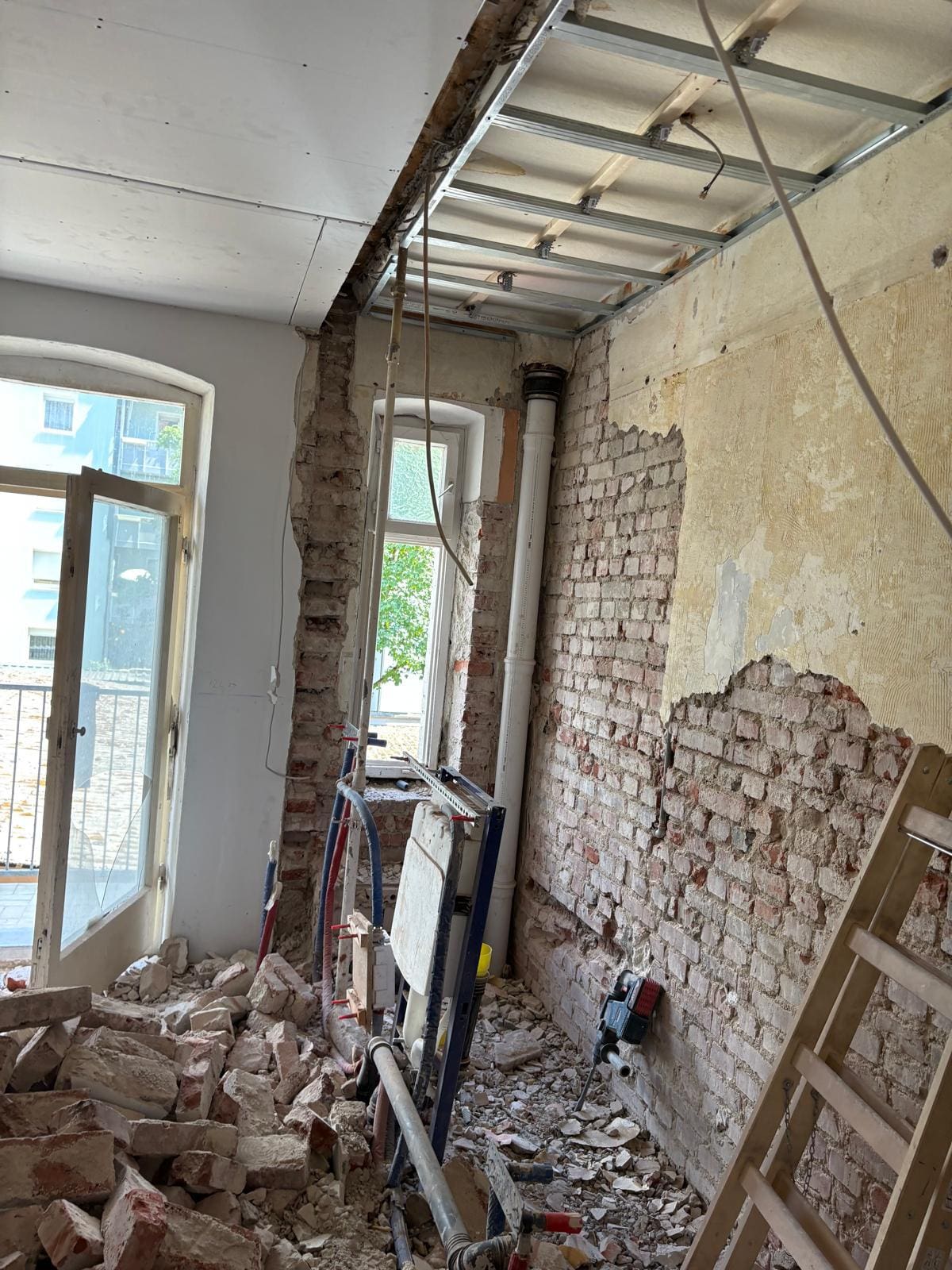
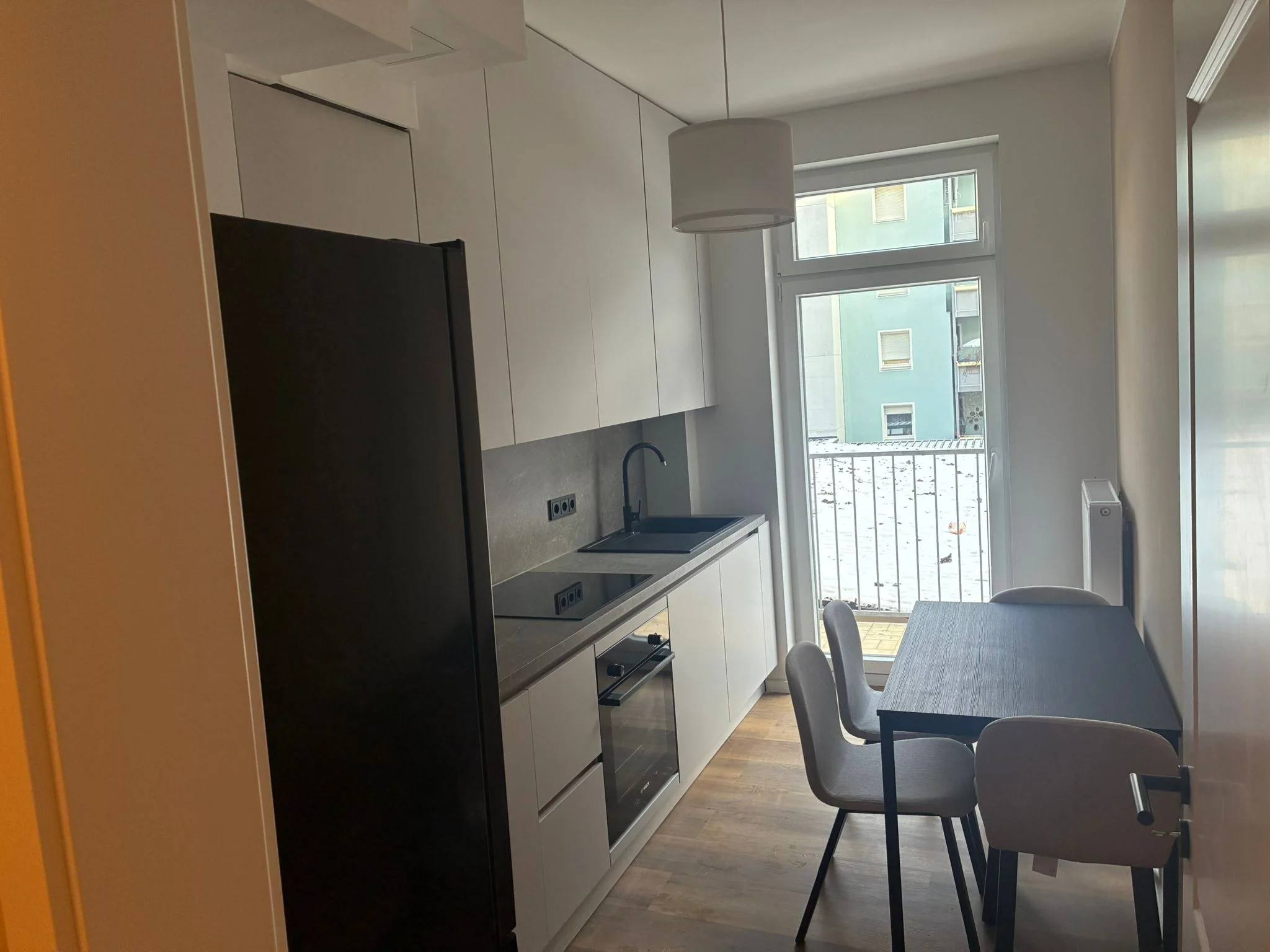
At LDP Group, we don’t just help you invest in real estate we take it a step further by managing in-house renovations to maximize your property’s value and rental potential. Our team coordinates everything from layout optimization to energy-efficient upgrades, ensuring the property meets both legal standards and market demands. By handling the entire renovation process internally, we maintain full control over quality, timelines, and cost-efficiency. This allows our clients to enjoy a hands-off experience while we deliver move-in ready, high-yield properties tailored to long-term growth.
At LDP Group, we provide integrated real estate tax support in Germany through our trusted network of English-speaking tax advisors specializing in expats and foreign investors. From optimizing deductions and managing property tax filings in Germany to navigating cross-border tax implications, our partners ensure full compliance while maximizing the tax benefits of real estate investment in Germany. This alignment of property strategy and tax optimization allows our clients to invest with clarity, confidence and long-term financial efficiency from day one.
Step-by-step assistance throughout the purchasing process, from property search to closing. Negotiation support to secure the best price and favorable terms for your investment. Coordination with legal professionals for due diligence, contract review, and documentation. Guidance on financing options and assistance with mortgage applications if needed.
Regular property inspections to identify maintenance needs and address issues promptly. Coordination of routine maintenance tasks such as repairs, landscaping, and cleaning. Access to a network of trusted vendors and contractors for quality service at competitive rates.
Conduct in-depth market analysis to identify high-return investment opportunities. Recommends properties tailored to your goals and budget. Assists in choosing neighborhoods with strong rental demand and growth potential. Evaluates property value, expected returns, and future appreciation prospects.
At LDP Group, we’re committed to more than just a one-time investment we’re your long-term partner in building a sustainable real estate portfolio. From the first property to expanding into a multi-unit strategy, we provide ongoing guidance tailored to your goals, risk profile, and life situation. Our team regularly reviews market opportunities, financing options, and tax strategies to help you scale efficiently. With our end-to-end support, you’re not just buying property: you’re building a future-proof portfolio designed for lasting growth.
We guide you through all official procedures: from financing and notary appointments to tax registration and property handover. Our team ensures every step is handled correctly, saving you time, avoiding costly mistakes, and making the investment process as smooth and stress-free as possible.